 Connected CNC
Industrial breakers, relays, contactors, protection devices, and control-circuit hardware support stable operation, electrical safety, and serviceability.
American Built CNC
Rebuilding CNC production around connected cells.
ABC turns fiber-laser cutting into the first deployable production cell: machine, automation, recipes, diagnostics, and support packaged as one unit.
Built for the labor-constrained shop floor.
ABC packages machine-tool hardware, automation, control software, diagnostics, and service into a cell that can be deployed and improved repeatedly.
LaborLess reliance on scarce senior operators
Job cycleSet up, cut, inspect, and repeat faster
ScaleStart with cutting, expand the cell model later
Self-contained production cell
The product is the cell, not a standalone cutter.
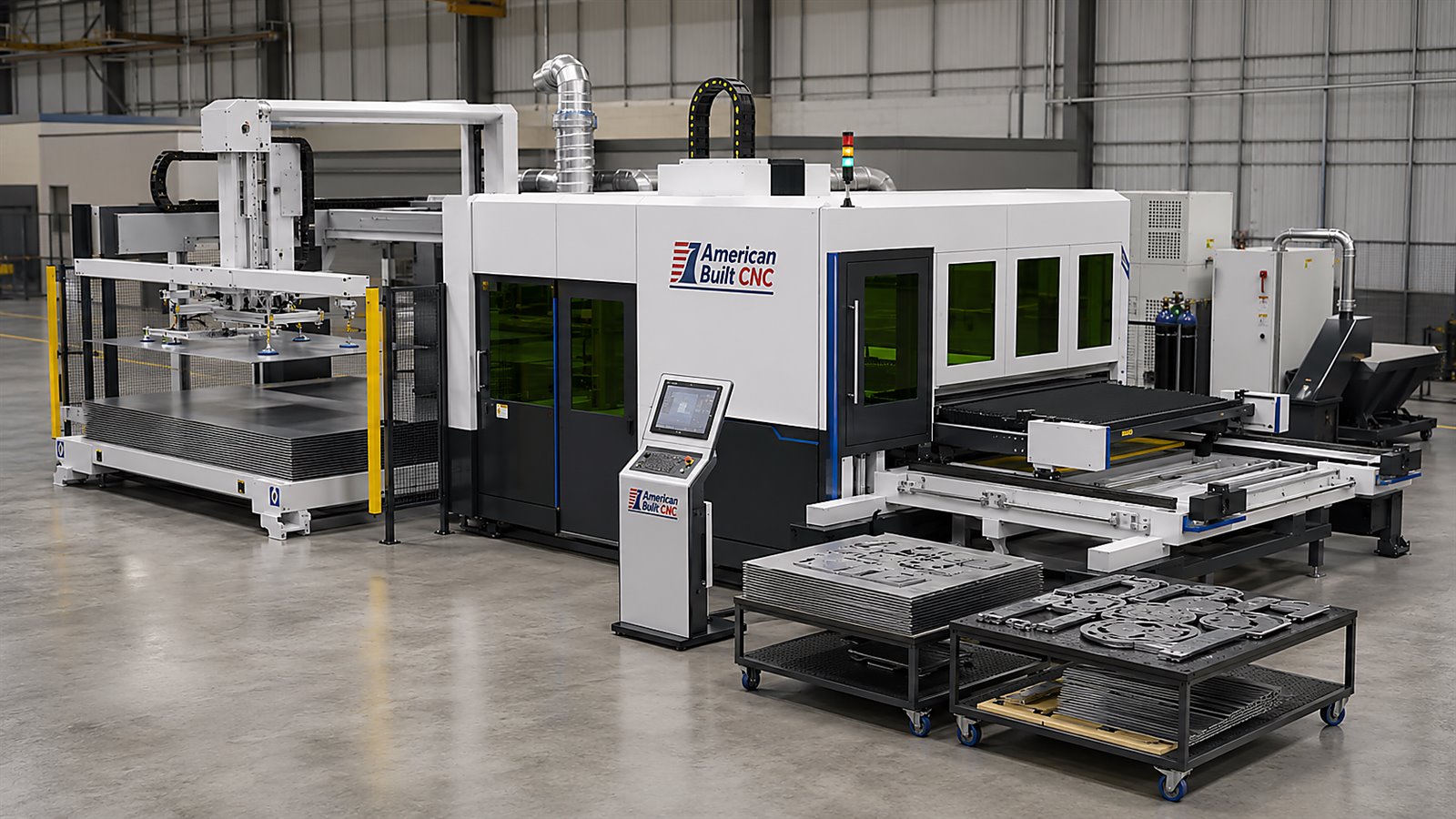
Each ABC cell ships as a deployable unit: machine platform, material handling, control layer, diagnostics, safety, and support packaged around repeatable production outcomes.
1
Machine platformU.S.-designed and U.S.-built fiber-laser platform with a high-rigidity, stress-relieved machine-bed configuration matched to the application.
2
Cell automationSheet stack, lift table, loading, sheet separation, pallet shuttle, unloading flow, part sorting, scrap handling, sensors, and guarding.
3
Control layerABC-owned motion control, HMI, alarms, logs, cut setup, and recovery workflows make operator support a product feature.
4
Diagnostics and supportRemote diagnostics, service data, parts demand, and support playbooks create a learning loop across deployed cells.
Common operating layer
One operating layer connects the first cell to the future factory system.
The cell is self-contained on-site, but not isolated. Over time, cutting, milling, bending, and inspection cells share the same operating logic, data model, and support loop.
Self-contained cell
Machine, automation, setup workflow, diagnostics, and support needed to be productive on a customer site.
Shared operating layer
Reusable product infrastructure turns shop-floor know-how into repeatable settings, recovery, and service workflows.
Motion control
HMI
Recipes
Diagnostics
Machine data
Support playbooks
Connected factory system
Cells can be monitored, supported, automated, and improved together instead of remaining disconnected islands.
Product architecture
Precision fiber-laser cell with machine-tool architecture.
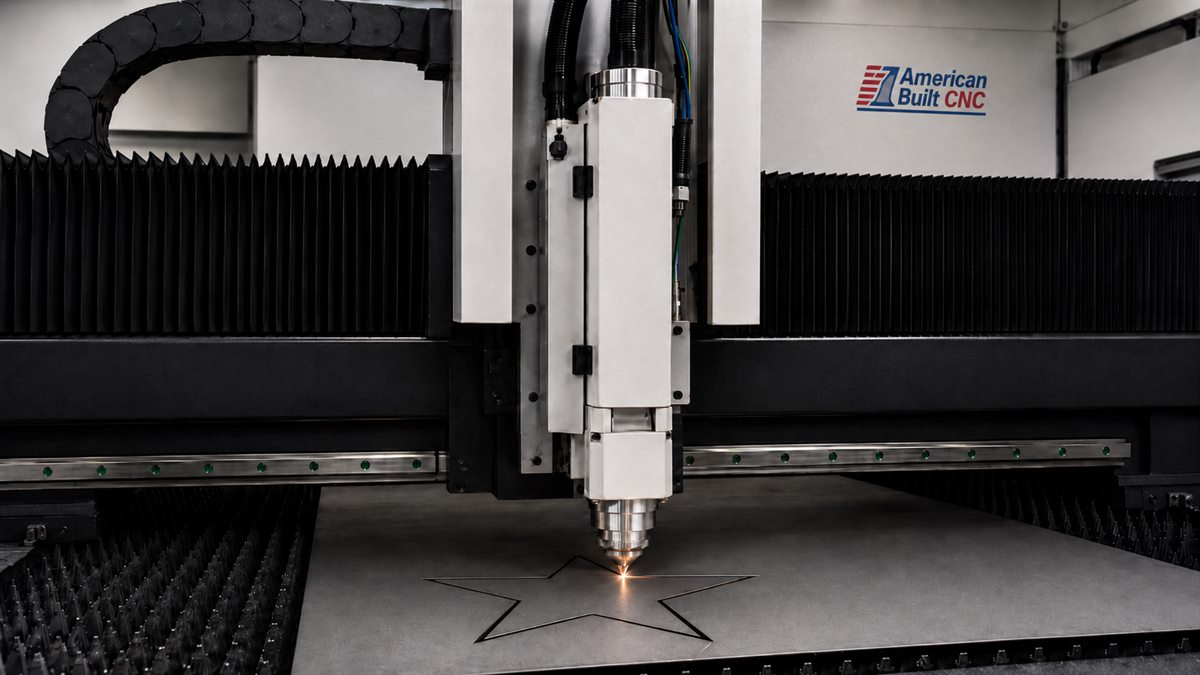
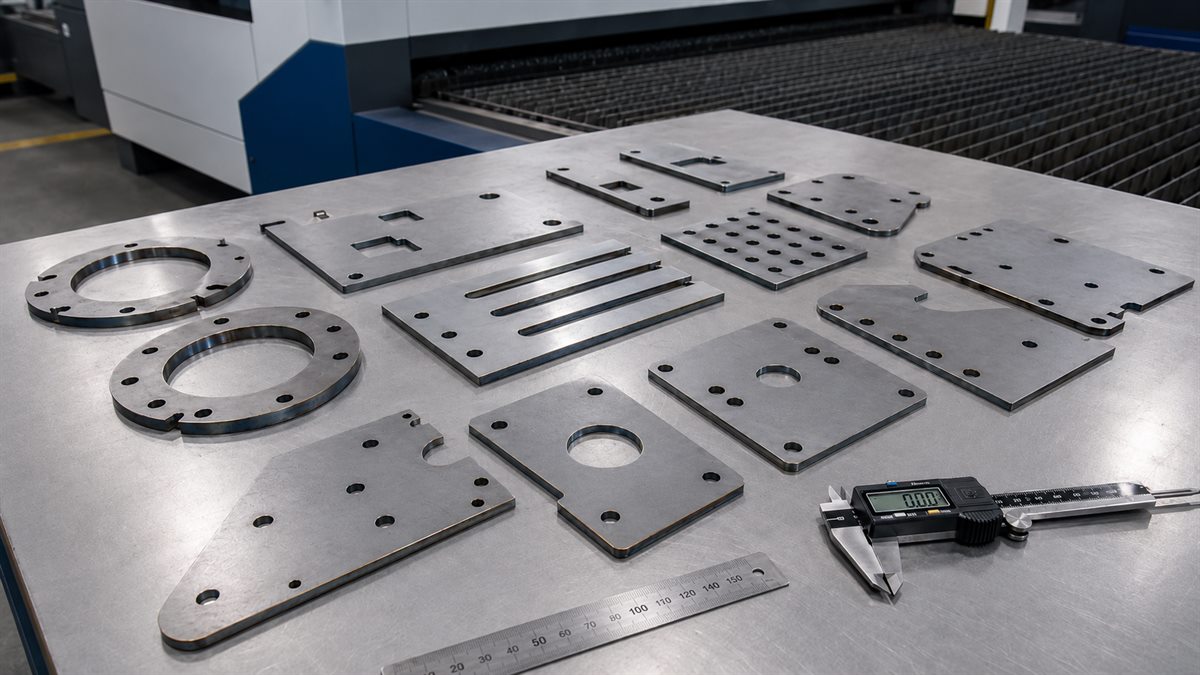
ABC's current design combines high-rigidity machine structure, precision motion, in-house cutting software, automation, diagnostics, and industrial safety architecture in one deployable cell.
StructureRigid stress-relieved bed
High-rigidity welded-steel or cast-iron configurations can be scoped by machine size, automation package, and precision requirements.
Motion targets+/-0.005 mm
Target machine positioning accuracy with precision rack drive, low-backlash reducers, and high-grade linear guides.
Repeatability+/-0.01 mm
Repeat positioning target for production consistency across recurring jobs and setups.
Cut quality+/-0.02 mm
Cutting accuracy target with contour quality for precision parts and first-article feedback.
SoftwareIn-house cutting stack
Interpolation, path planning, 2D drawing or 3D model import, alarms, logs, and remote maintenance.
Safety and serviceIndustrial architecture
Schneider electricals, Siemens servo architecture, monitoring, and NFPA79 / UL508A-oriented safety design.
Industrial reliability stack
Industrial-grade components for long-term uptime.
The cell is designed around serviceable industrial components, online monitoring, and diagnostics so shops can maintain the machine faster and keep production moving.
High-response multi-axis control and industrial bus communication support trajectory tracking, dynamic performance, and stable cut quality at speed.
Laser power and source brand can be scoped around the customer's material mix, including carbon steel, stainless, aluminum, copper, and process-specific edge-quality needs.
2D drawing and 3D model import, contour recognition, nesting, automatic path generation, edge finding, autofocus, process databases, and production traceability reduce manual work.
Production data, machine status, alarms, and job history can be scoped for MES or ERP integration when customers want tighter digital production management.
Modular fume extraction and closed-loop temperature control help preserve consistency; hydraulic valves, pressure switches, and control assemblies are applied where the automation package requires them.
Emergency stop, safety interlocks, door monitoring, limit protection, laser safety interlock, and abnormal power-loss protection are designed into the cell architecture.
Electrical, servo, sensor, communication, cooling, and automation signals can be monitored continuously, with alarms and fault-location guidance to reduce downtime.
Remote diagnostics and maintenance data help ABC support operators, identify likely fault locations, recommend service steps, and restore production faster.
Why fiber laser first
Start with the cutting bottleneck.
For fabrication shops, cutting is often where schedule pressure, operator expertise, material handling, and cut-quality issues show up first. ABC packages the cutter and surrounding workflow as one supported cell.
Capacity
Add cutting capacity
Bring more sheet and plate work in-house without asking one senior operator to manually stitch together machine setup, automation, diagnostics, and support.
Operation
Make setup repeatable
Recipes, HMI workflows, alarms, logs, and remote diagnostics help turn proven material and thickness setups into repeatable shop-floor routines.
Support
Keep the cell running
Diagnostics-led service, domestic support, parts planning, and installation guidance reduce the burden on the customer after the machine lands.
What you buy
A fiber-laser cell package, not a parts hunt.
ABC scopes the machine platform, automation package, support plan, and installation needs together so the buyer can evaluate the full production cell instead of piecing together a cutter, loader, controls, and service separately.
$68K-$170K
Machine platformFiber-laser machine structure, motion hardware, laser source, control cabinet, HMI, and safety architecture.
~$150K
Cell automation packageSheet stack, lift table, vacuum loading, separation, pallet shuttle, unloading flow, part sorting, sensors, guarding, and HMI integration.
$220K-$320K
Delivered cell rangeMachine plus automation before freight, installation, gas setup, support, parts, and selected options.
Support
Diagnostics, parts, consumablesRemote diagnostics, phone support, replacement parts, nozzles, lenses, protective windows, and service planning.
Scope the whole cell before you buy.
The right quote depends on table size, laser power, automation scope, materials, thickness range, assist gas, install constraints, and the level of commissioning support your shop wants.
Deployment fit
Start with the work your shop actually cuts.
A good cell quote starts with your materials, thickness range, table-size needs, part flow, labor constraints, and installation environment. ABC uses that context to recommend the closest machine and automation scope.
Contact
Tell us what you cut today.
Share your current machine, materials, thickness range, table-size needs, and where your operators lose time. ABC will recommend whether the fiber-laser cell is a fit.
Best fit: fabrication shops comparing imports, used equipment, dealer packages, and premium industrial systems.
Useful details: current equipment, cut-quality issues, job mix, uptime pain, automation needs, and installation constraints.
We can follow up with cell specs, automation scope, pricing, installation needs, and timing.